Donald Ruggles, Ruggles Mabe Studio / CU Denver
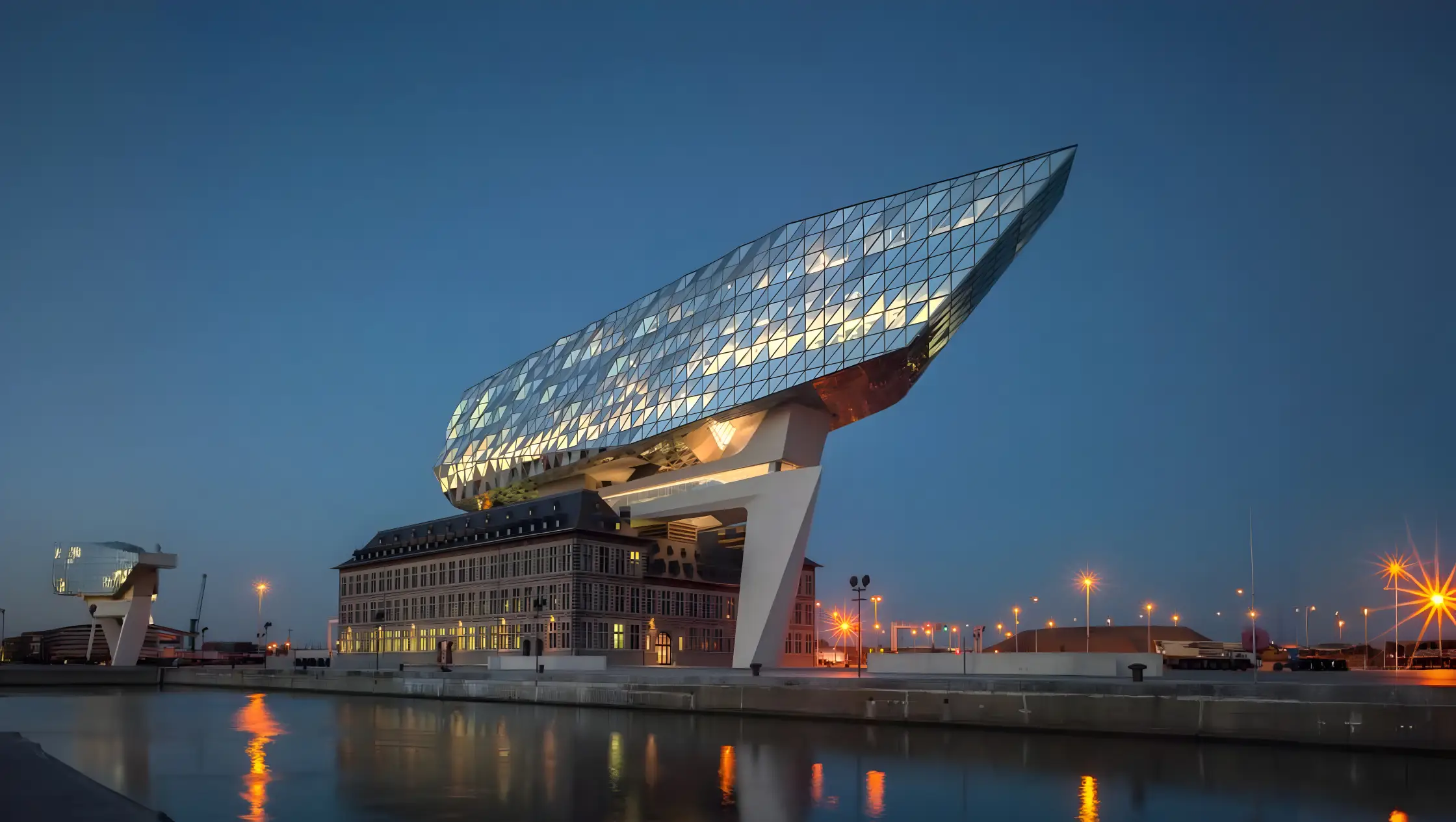
- Non-beautiful spaces are not merely unpleasant but constitute measurable stress environments with serious physiological consequences. Donald Ruggles argued that the brain processes 11 million bits of information per second and categorises environmental inputs into two fundamental pattern types: exciting patterns that activate sympathetic survival responses, and beautiful patterns that activate parasympathetic pleasure responses. When spaces are devoid of harmony, proportion, and natural materials, the sympathetic nervous system dominates, raising heart rate, elevating blood pressure, narrowing mental focus, and triggering chronic inflammation, which Ruggles described as a newly understood driver of cancer and cardiovascular disease. For architects and designers working in displacement contexts to remain unaware of this evidence, he argued, is professional malpractice.
- A healthy nervous system requires balance between sympathetic and parasympathetic inputs, a state known as homeostasis, and the built environment is one of the most powerful levers available for achieving or disrupting that balance. Ruggles demonstrated that survival patterns are five to seven times neurologically stronger than pleasure patterns, which means that chaotic or threatening environments overwhelm the restorative effects of beauty with relatively little effort. In displacement contexts where residents are already carrying chronic stress from trauma, loss, and uncertainty, this imbalance is not a background condition but an active impediment to recovery that thoughtful design can directly address.
- Institutional resistance to beauty in humanitarian design often stems from the word itself, which carries associations with luxury, subjectivity, and superficiality. Ruggles proposed a practical reframe: replace beauty with pleasure and ask instead whether we want to create environments that are pleasurable for the people who inhabit them. This linguistic shift makes the neurological and physiological argument harder to dismiss, grounding what might otherwise seem like an aesthetic preference in the language of health, well-being, and biological necessity that decision-makers and donors are more likely to fund and prioritise.
Minar Thapa Magar, Catholic Relief Services / Sindh Housing Recovery and Reconstruction Platform
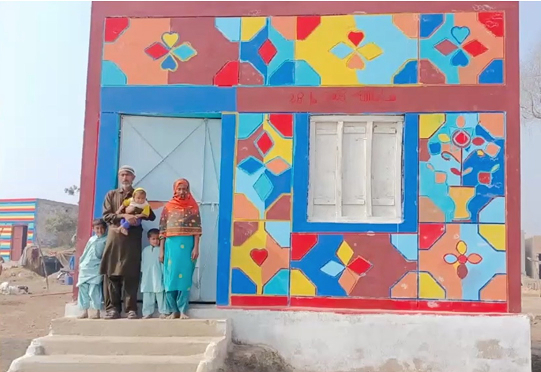
- Owner-driven reconstruction in flood-affected Sindh, Pakistan demonstrated that when communities are trusted with the resources and technical guidance to rebuild their own homes, beauty emerges not as an add-on but as an intrinsic expression of belonging and resilience. With modest financial support of approximately one thousand dollars per household and training in flood-resilient construction techniques, over one million families rebuilt their homes themselves, integrating traditional ralli textile patterns, coloured wall paintings, and culturally meaningful designs. When a few houses began adopting these patterns, the practice spread spontaneously across entire settlements like wildfire, driven entirely by community initiative rather than external instruction.
- The act of marking one’s rebuilt home with colour, pattern, and cultural identity is not decorative but a celebration of survival and a reclamation of dignity. Minar Thapa Magar described a 62-year-old resident who, upon completing his rebuilt home, described it as the house he had dreamed of his entire life, one he was certain would withstand future floods. The artwork on his walls represented not mere embellishment but a lifetime’s achievement and the relief of a journey completed. A structure without this emotional attachment, Magar observed, is lifeless: it is four walls, but it is not a home.
- Participatory design processes that genuinely engage women and children produce more inclusive, culturally grounded, and meaningful recovery outcomes than top-down standardised approaches. In Sindh, focus art group sessions with children revealed that girls prioritised social spaces with flowers, trees, and hopscotch areas while boys gravitated toward physical games, and that a planned sealed playground needed to include a muddy area where children could play freely. Women’s groups designed community centres with shaded gathering spaces suited to the extreme heat and local social practices. These community-led design inputs transformed what might have been generic infrastructure into spaces that residents felt genuine ownership over and would maintain and invest in over time.
Carolina Helena, Luxembourg Red Cross Shelter Research Unit
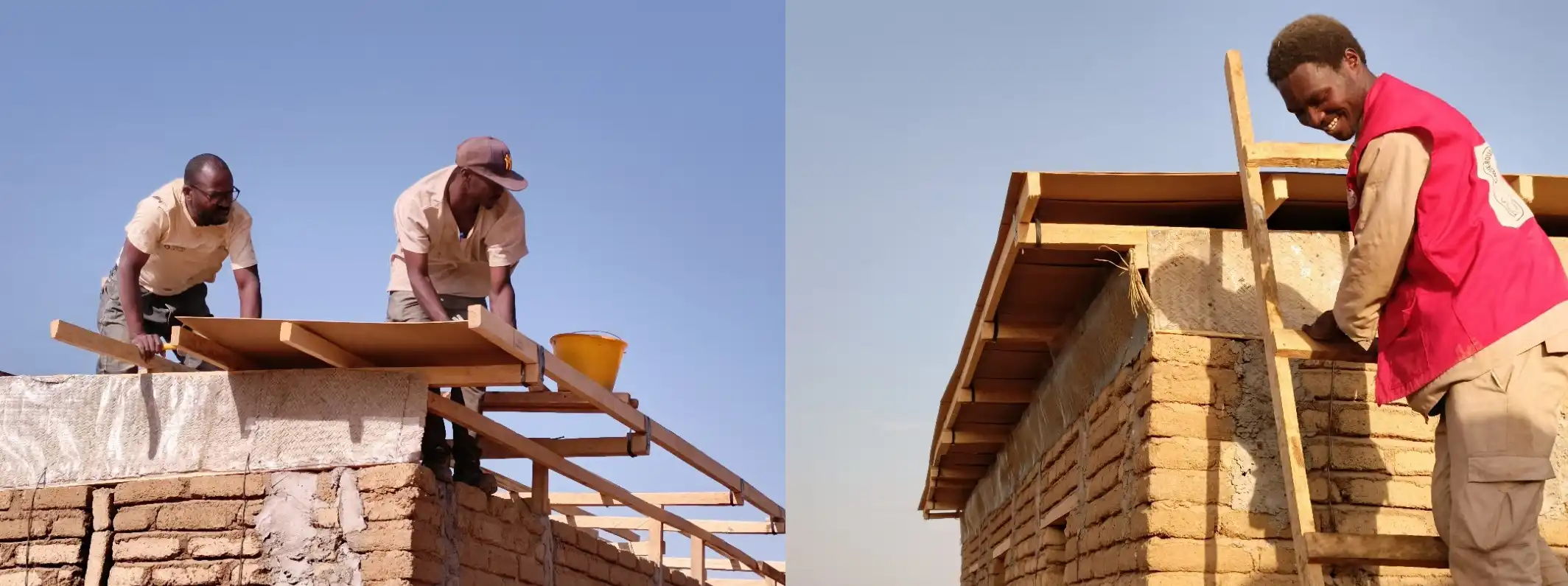
- Beauty in humanitarian shelter design can be advanced most effectively not by arguing for beauty directly but by reframing it in terms that institutional decision-makers already value: sustainable construction, biophilic design, and preventive healthcare. Carolina Helena candidly acknowledged that throughout the entire development of the Luxembourg Red Cross shelter prototype for refugee camps in eastern Chad, her team never once used the word beauty at any decision-making table. Instead, they made the case through arguments about biobased materials that reduce environmental impact, locally sourced compressed earth blocks that remind residents of homes in Sudan and generate hope, passive ventilation and thermal control that reduce trauma-related anxiety, and symmetric facade design that activates parasympathetic responses. The project achieved dignity and beauty precisely because the team found the language that opened institutional doors.
- The Chad shelter prototype demonstrated that thoughtful design choices can create dignified, culturally meaningful, and climate-responsive environments without significant additional cost, provided those choices are made at the design and material specification stage rather than added as afterthoughts. The prototype was conceived as an evolutive shelter, designed to follow households from emergency through transitional to more permanent phases, reusing materials across stages as camps increasingly became permanent villages. Compressed earth blocks using local construction techniques familiar to Sudanese refugees gave residents both structural resilience and a sensory connection to the lives they had before displacement and could still have after it.
- The humanitarian sector faces a critical challenge in translating compelling qualitative evidence about beauty’s impact into the quantitative data that institutional decision-makers require. Carolina Helena observed that evaluation in humanitarian settings typically relies on self-reported satisfaction, where a simple yes from residents is considered sufficient evidence of success, leaving no rigorous basis for demonstrating the correlation between aesthetic quality and health, resilience, and dignity outcomes. She noted that while evidence for beauty’s physical health impacts can be extrapolated from studies in other contexts, the mental health dimensions remain under-researched in humanitarian settings specifically, and raised the provocative question of whether the World Health Organisation’s recent addition of urban living as a risk factor for depression might itself be partly explained by the systematic failure to build beautifully.