Dr. Michael Spicher, Aesthetics Research Lab
- Aesthetic experience is a basic human good necessary for flourishing rather than a luxury deferred until after survival needs are met, a claim that can be demonstrated not through logical argument alone but by observing what people actually do. Across cultures and contexts, people spend time, money, and energy grooming, decorating, and travelling to experience beauty, and the absence of aesthetic experience is immediately felt as deprivation. Primo Levi’s account of reciting Dante’s poetry in Auschwitz, where he said he would have given up his daily food just to remember a connecting line because for a few moments he forgot who he was and where he was, illustrates that aesthetic experience is not a distraction from survival but one of the most fundamental expressions of what it means to remain human under conditions designed to erase humanity.
- The Western devaluation of beauty can be traced directly to the destruction wrought by the two World Wars, after which artists including Max Ernst and Barnett Newman explicitly rejected beauty as a goal, seeing it as complicit in a civilisation that had failed catastrophically. This historical rupture, combined with the efficiency-driven values of late capitalism and the widespread misreading of Maslow’s hierarchy as a licence to defer aesthetic needs, produced institutional cultures that systematically dismiss beauty as secondary. Philosophers including Martha Nussbaum with her capabilities approach and natural law philosophers who identify aesthetic experience as a basic human good offer a counter-framework: not a hierarchy but a constellation of goods, none of which can be completely neglected without diminishing human life.
- Acts of genuine aesthetic creativity and beauty are inherently acts of resistance in a world that has systematically beaten creativity out of people. Spicher observed that even Arthur Schopenhauer, the philosopher most associated with pessimism and the view that life is suffering, argued that beauty and art provide the only moments of genuine rest from that suffering. More pointedly, the world actively discourages aesthetic engagement as people age, replacing the brightly coloured, creatively stimulating environments of childhood with the oppressive uniformity of adult institutions. In this context, every act of beautification in a displacement setting, every poem written, every wall painted, every garden tended, is not merely therapeutic but a form of rebellion against the systemic denial of beauty to those deemed unworthy of it.
Francisco Alcalá Torreslanda, Home Storytellers
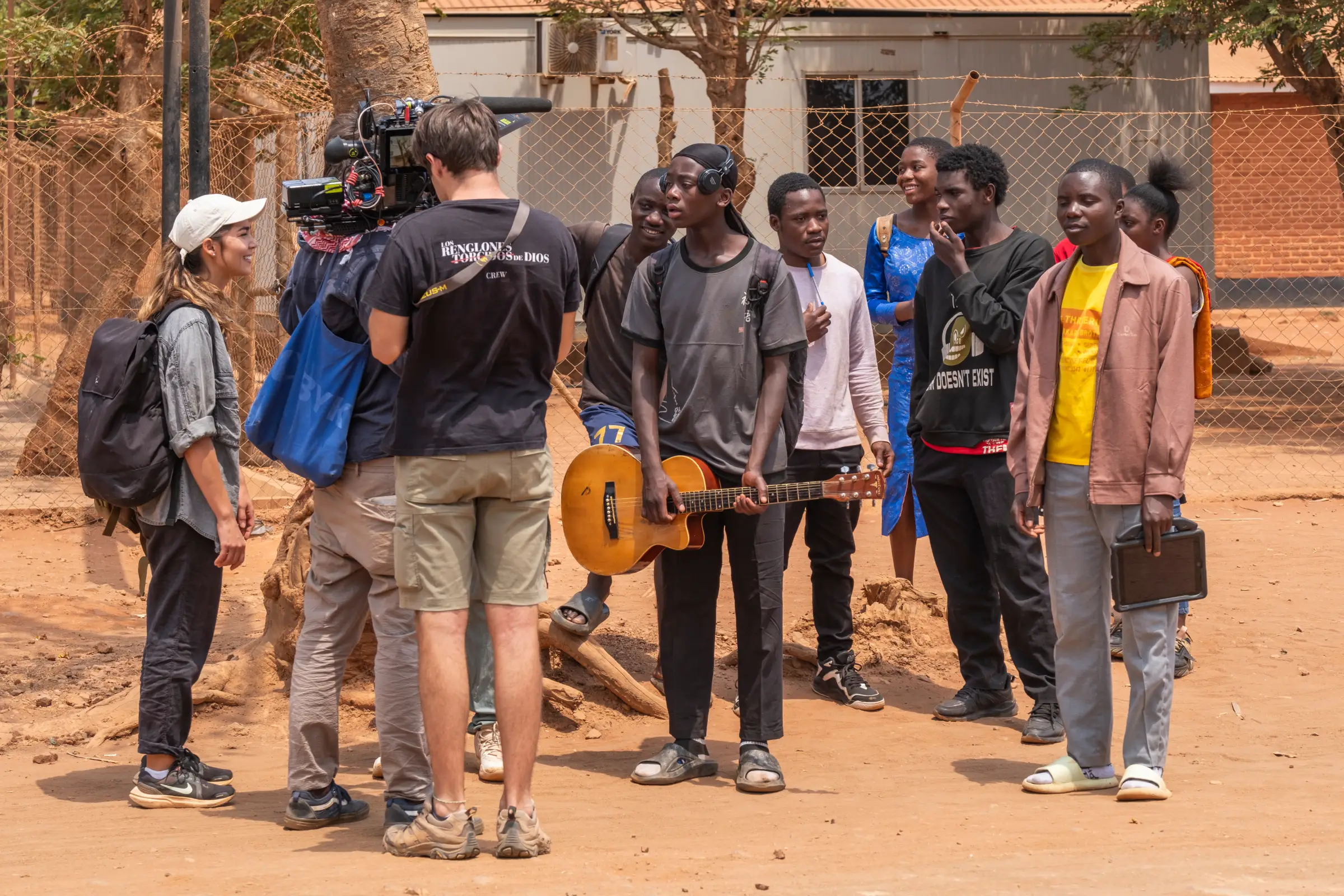
- In Dzaleka Refugee Camp in Malawi, a camp built for 10,000 people and hosting more than 55,000, a group of teenage poets write, perform, and voluntarily teach spoken-word poetry to younger children three times a week. This is not a programme or an intervention but something that arose entirely from within the community, and it functions as what one of the poets described as a lifeline: the thing that kept him grounded after everything he had been through. The contrast between the harsh material conditions of the camp and the vibrant creative movement within it was, as Alcalá Torreslanda observed, what first revealed to his team that art is a strategy not just for survival but for thriving.
- Hope-driven, community-led storytelling that centres dignity, agency, and creativity rather than trauma and victimhood is both an ethical imperative and a more effective tool for narrative change. The documentary We Name Ourselves was made with minimal reliance on interviews, following the poets in their daily lives and personal moments to achieve authenticity, and the protagonists were invited to shape the film’s direction from the outset. The title itself reflects the film’s core argument: these young people refuse to be defined as refugees and insist on being known by their names, their poetry, and their roles as teachers and changemakers. This approach helps audiences connect through recognition rather than pity, which is more likely to shift narratives and generate sustained engagement.
- The story does not end when the film does. The visibility generated by We Name Ourselves is being used to resource a set of concrete community-led initiatives in Dzaleka including a national screening tour across Malawi to open dialogue on refugee policy, a virtual portal connecting the camp to global educational and cultural partners, and the development of science, technology, and artistic expression labs alongside an expanded library. This model, using art and storytelling as a platform for longer-term community development rather than a one-off intervention, demonstrates how aesthetic expression can generate material improvements in livelihoods, education, mental health, and cultural participation when it is treated as infrastructure rather than decoration.
Juan Pablo Franco Jiménez, Blumont Group Colombia
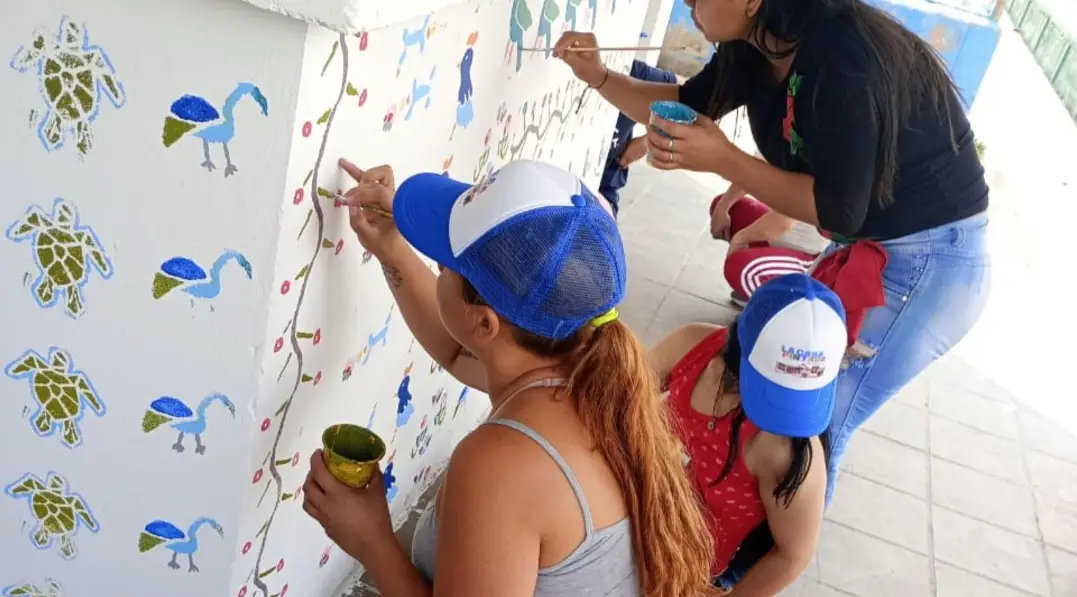
- The Casa Pintada methodology, introduced in earlier sessions as a tool for building social cohesion between displaced Venezuelans and host communities in Colombia, has a deeper and more challenging application in communities affected by decades of armed conflict. In Lammono, a community of approximately 200 families who had all fled in the late 1990s and were slowly returning, a woman who had returned to a house almost consumed by jungle painted it purple and painted the door and façade with paint rolls from the Casa Pintada technique. The testimony from that community captures what followed: seeing their houses painted gave residents the motivation to return and reclaim the space they had abandoned when armed conflict took over their homes.
- Some spaces carry the physical imprint of terror in ways that make them psychologically inaccessible to the communities that need to use them. In one Colombian community, a health post that had been used as a jail and torture site by paramilitaries had a death figure painted on its front wall, and residents were afraid to paint over it even years after the paramilitaries had left. It was only through the Casa Pintada process, which gave communities both the practical tools and the collective courage to transform such spaces, that residents were able to say: we were afraid, but now we are strong enough to change it. The entire building was eventually demolished and rebuilt with two of the original walls retained as a deliberate act of memory, and a school remembrance hall was created at a site where a teacher had been killed, transforming a place of daily trauma into a space of collective dignity and historical witness.
- Scaling dignity-centred aesthetic interventions within large institutional systems requires working as locally as possible and demonstrating impact in terms that local governments already value. Franco Jiménez described how one municipality in Santander de Quilichao allocated approximately 50 thousand dollars of its own local funds to continue the Casa Pintada methodology, framing it simultaneously as violence prevention, youth engagement, and a public health intervention led by the health secretary. This reframing, similar to Carolina Helena’s strategy of advancing beauty through the language institutions already speak, demonstrates that aesthetic interventions can be institutionalised when their benefits are articulated in terms of measurable outcomes that decision-makers can see, fund, and take political credit for.