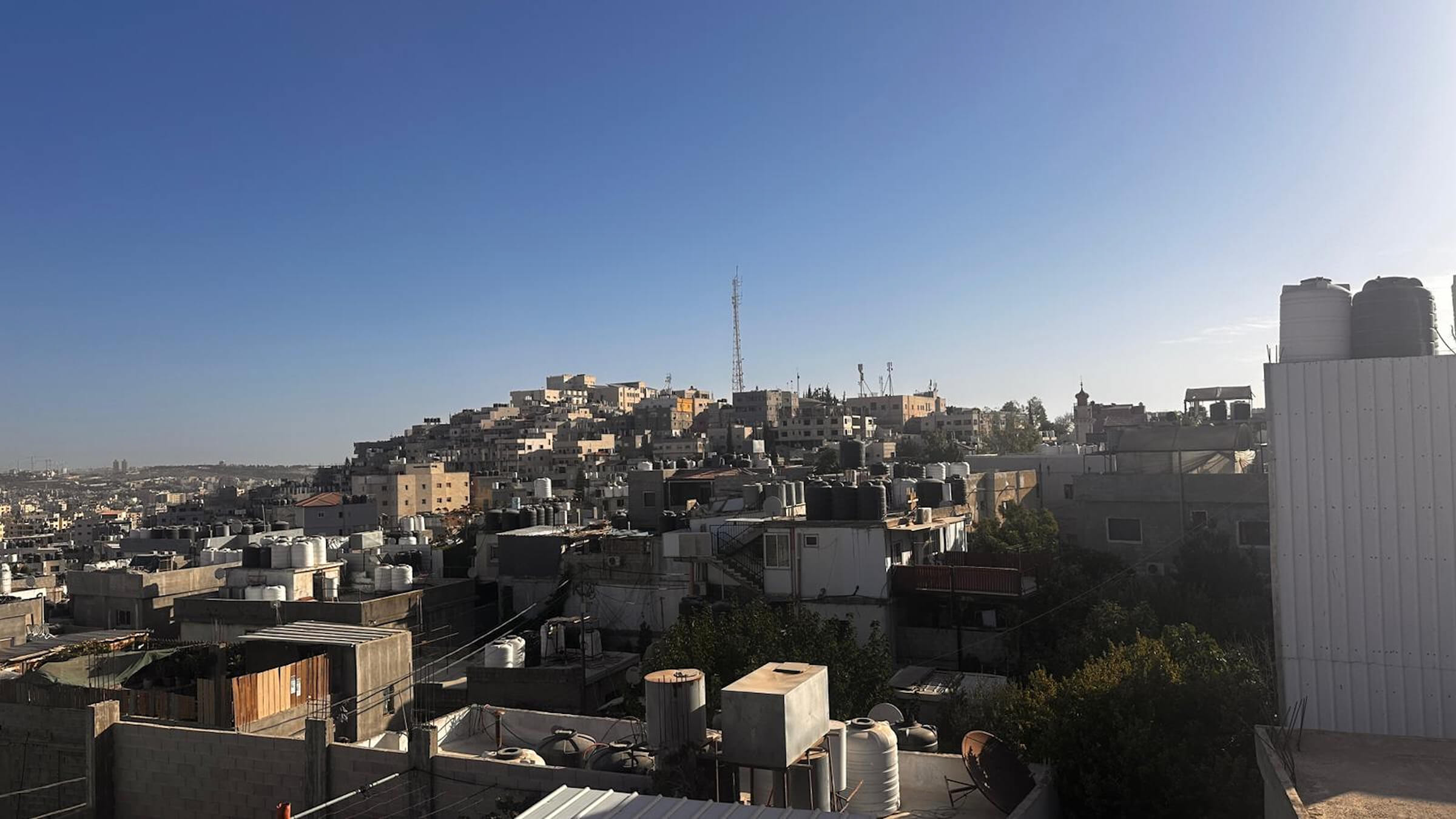
Seven years before the First Intifada, I was born in the Dheisheh Refugee Camp – one of the largest Palestinian refugee camps in Bethlehem – established by UNRWA to shelter those displaced from their villages. My family, who came from the village of Zakariya, shared a story much like that of the other families.
They arrived at the camp believing it would be a temporary refuge, a place to stay for only a few days before returning home. Yet, that temporary stay became a painful reality, one that lasted for generations – and for me, it became the only world I knew.
Although I was born decades after the year of displacement and the Nakba, I grew up listening to my grandfather and grandmother speak about Zakariya and the surrounding villages.
In my childhood, the camp was surrounded by barbed wire that made it feel like a large prison. There was no freedom of movement, and within a space of barely half a kilometer, I found myself confined. Yet, through my childlike eyes, it was heaven on earth. Along its narrow alleys grew fig trees, cactus trees, and mulberries – trees that filled the camp with life, warmth, and unforgettable memories.
As a child, every corner of the camp was an adventure, and every tree bore witness to a moment of joy or wonder. I would run between the trees, breathe in the scent of ripe mulberries, and sit beneath the shade of the figs, telling myself stories born of imagination. Despite the camp’s small size, it felt to me as vast as the world – full of life, safety, and curiosity.
But time changed, and with it, the camp’s features faded.
The fig, mulberry, and cactus trees I once knew have mostly disappeared. The green fences of trees that once shaded the alleys and offered comfort are now gone. The camp remains enclosed by wire, and life within it continues steadfastly – yet something of the beauty of childhood has vanished, leaving behind a blend of nostalgia and sorrow in my heart.
Still, the memories of the camp and its trees remain in my mind as a bridge between past and present. They remind me that even in the smallest and most confined of places, beauty can still flourish – and that memories are the only trees time cannot uproot.
A few months ago, a question crossed my mind: Where did all the trees go?
This question led me on a journey – a search for answers through a series of recorded interviews with residents of the camp, asking them: Where did the trees go, and why are they no longer here? Here are some of their voices:
Khaled Lutfi Lakhmour, from the depopulated village of Zakariya, still insists on planting in the narrow space before his home:
“Despite the limited space in front of our house in the camp, I planted cucumbers, cauliflower, and cabbage in a small garden. Planting is not just about crops – it’s a source of spirit and motivation for life. If water were consistently available, we would have planted even more.”
Hussein Al-Qassas, originally from Sarafand, provided some important history:
“Because the people of the camp are refugees from agricultural villages, they continued planting the same trees they used to grow in their villages and homelands. You can notice the planting of figs, grapes, and cactus.”
“For example, the people of the village of Ajjur were famous for planting cactus in their village, and they continued planting cactus here in the camp as well, just as they planted them in their villages. For this reason, figs, grapes, and cactus became common here, because the people of these villages used to grow them in their villages, such as Zakariyya and Jarash. Here, where I stand, there used to be a large mulberry tree, along with fig and cactus trees. Today, there are only buildings.”
Anwar Abu Joudeh from the depopulated village of Zakariya, recalled the following:
“In this house, there used to be many trees, and specifically in this area, there was a loquat tree and a grapevine. In the exact spot where this concrete pillar now stands, there used to be a large loquat tree that produced large fruits with big seeds. Unfortunately, I had to remove it when building the house, due to my need to expand for my children. As we expanded the construction in this particular area, the tree was removed, and the pillar was placed here instead. As you can see, Mr. Nizar, the pillar is not perfectly straight, which could be due to the moist and decomposed soil in this location. This is the reality of the camp and the situation we live in today.”
Montaser Abu Alia, from Al-Qabu, spoke with pride of a tree that survived:
“In the middle of this area stands a large mulberry tree that has been here for a very long time. My cousins still collect its fruits to this day. It’s one of the few trees that remain standing.”
Ali Shafoot, from Al-Faluja, showed me his small garden and said:
“We planted this fig tree in rocky soil. We felt the need to grow something green – something alive. We are trying, as much as we can, to turn this small space into a garden, a place where we can breathe and feel alive.”
Ratiba Ibrahim Khalil Abu Rayala, who arrived in the camp in 1967, remembered a time when space and trees were abundant:
“When I got married, this place was full of life. There were two mulberry trees right here, and we grew up eating their fruit. But with time, the trees were uprooted to make room for new houses. Despite the tight space, we still grow mint, roses, and peppers in every corner we can find. We insist on living.”
Today, as I walk through Dheisheh Camp, I realize that its people are still deeply rooted, even if most of the trees are gone. Below is a recent photo of part of an old UNRWA room, with a fig tree standing in front of it. I took this photo just two days ago; a quiet reminder that some roots still cling to the soil of memory. The branches may have been cut, but the roots remain alive in memory, in resilience, and in the quiet persistence of those who continue to plant hope in every small corner
This text, including the quotations, was translated from the original Arabic by Nizar ALayasa.
About the Author:
Nizar ALayasa is a Palestinian traveler from Dheisheh Refugee Camp near Bethlehem, where he has lived as a refugee since birth. His family was initially displaced from the village of Zakariya during the 1948 Nakba. Born seven years before the outbreak of the First Intifada, Nizar grew up in the camp, surrounded by fences and checkpoints. These circumstances fueled his curiosity and love for exploring the world beyond its confines.
Nizar’s passion for exploration began at an early age, relying on his memory to preserve the details of his experiences since he lacked the means to document what he saw. With the rise of social media, he began creating short videos that highlight historical, natural, and religious sites across Palestine, showcasing the beauty and depth of the land while moving beyond stereotypical images tied to political conflicts.
Through his work, Nizar presents Palestine as a place of environmental beauty and cultural significance, highlighting the everyday life of its towns and villages. Despite the challenges he faces as a refugee living in the Dheisheh camp, Nizar continues his journeys with determination and a deep belief that beauty can be a form of resistance, and that documenting everyday life in Palestine is an act of survival and resilience. His projects have garnered widespread interest locally and globally, with followers appreciating the richness and authenticity of his posts.
His stories and images have inspired many young Palestinians and Arabs to explore their own countries and rediscover places they had only heard about. This has made him a symbol of a new generation of Palestinian travelers who use the camera as a tool for knowledge and identity.
His current project, My Homeland Is Not a Camp, documents various sites in the West Bank reflecting the rich history and beauty of Palestine. Nizar ALayasa is also actively working on improving the gardens in refugee camps near Bethlehem through an initiative aimed at enhancing the quality of life for refugees. He strives to create green spaces that contribute to the aesthetic and psychological wellbeing of camp residents while providing areas where children and families can enjoy recreational activities. These efforts reflect his deep belief in the importance of improving the surrounding environment, despite the numerous challenges refugees face daily.